The 2026 Architectural Guide
Architectural Landmarks
in Roanoke, Virginia
From 19th-century Tudor Revival hotels to contemporary glass-and-steel museums - explore the structural icons that define the Star City skyline.
Roanoke VA Architectural Landmarks Quick Reference
What Are the Famous Architectural Landmarks in Roanoke, VA?
The most famous architectural landmarks in Roanoke, Virginia span 140+ years of structural history. The top six landmarks are the 1882 Tudor Revival Hotel Roanoke, the 1902 Gothic Revival Basilica of Saint Andrew, the 2008 contemporary Taubman Museum of Art (designed by Randall Stout), the 1922 Victorian Roanoke City Market Building, the 1925 Art Deco Patrick Henry Hotel, and the 1922 Neoclassical Jefferson Center.
Roanoke Architectural Treasures: 2026 Matrix
Compare construction dates, architectural styles, primary current uses, and neighborhood contexts across Roanoke's historic and modern landmarks:
Landmark Structure | Year Built & Style | Primary Current Use | Neighborhood Location |
Hotel Roanoke | 1882 - Tudor Revival | Grand Hotel & Conference Center (Curio by Hilton) | Downtown / Shenandoah Ave |
Basilica of Saint Andrew | 1902 - High Victorian Gothic Revival | Active Catholic Minor Basilica & Sanctuary | Gainsboro / Saint Andrew's Hill |
Taubman Museum of Art | 2008 - Contemporary Glass & Steel | Regional Fine Art Museum (81,000 sq ft) | Downtown Cultural District |
Roanoke City Market Building | 1922 - Victorian / Neoclassical | Artisan Food Hall & Commercial Hub | Historic Market Square |
Patrick Henry Hotel | 1925 - Art Deco / Georgian Revival | Luxury Apartments & Ground-Floor Retail | Downtown / Jefferson Street |
Jefferson Center | 1922 - Neoclassical Revival | Performing Arts Center & Community Venue | West End / Downtown Corridor |
I. Historic Hospitality & Faith Icons
1. Hotel Roanoke (1882)
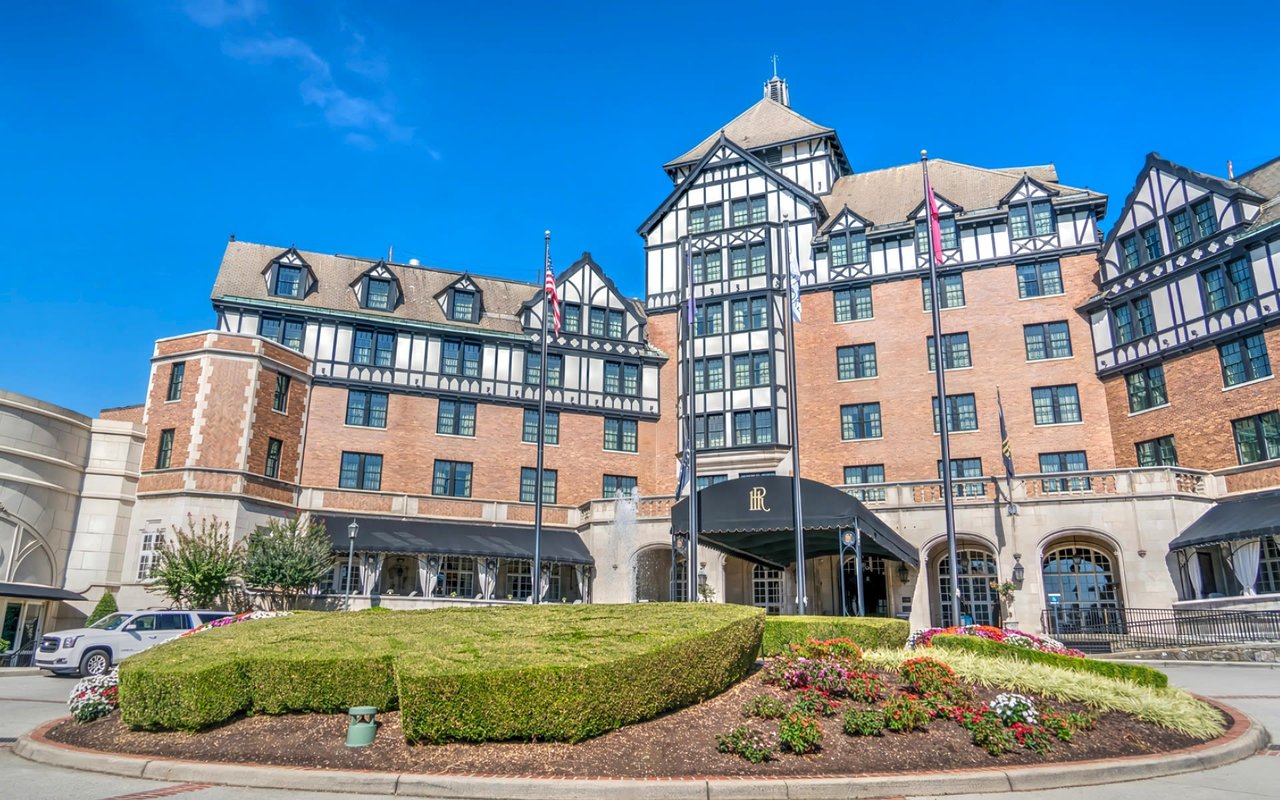
Built by the Norfolk and Western Railway in 1882, the Hotel Roanoke is a 144-year-old Tudor Revival masterwork featuring steeply pitched gables, half-timbering, and intricate brickwork. Restored in 1995 and operating today as a Curio Collection by Hilton property, it stands as the premier historical hotel of Southwest Virginia. Explore our Roanoke history guide for rail-era context.
2. Basilica of Saint Andrew (1902)
Perched high on Saint Andrew's Hill overlooking the downtown skyline, the Basilica of Saint Andrew is a twin-spired High Victorian Gothic Revival cathedral consecrated in 1902. Designated a Minor Basilica by Pope Francis in 2012, the structure boasts soaring stone spires, elaborate stained-glass windows, and intricate hand-carved altar detailing.
3. Patrick Henry Hotel (1925)
Designed by renowned architect William Lee Stoddart and opened in 1925, the 11-story Patrick Henry Hotel represents Roanoke's Roaring Twenties boom. Its Art Deco and Georgian Revival facade features ornamental stone arches and grand ballroom spaces. Renovated in 2011, it now operates as luxury apartments while retaining its historic public lobby spaces.
II. Civic Commerce & Cultural Centers
4. Taubman Museum of Art (2008)
Designed by Los Angeles architect Randall Stout (a protégé of Frank Gehry), the 81,000-square-foot Taubman Museum of Art opened in 2008. Its dramatic undulating zinc roof and soaring glass atrium evoke the surrounding Blue Ridge Mountains and Roanoke's industrial rail heritage, establishing a bold contemporary anchor downtown.
5. Roanoke City Market Building (1922)
Operating continuously since 1882 on Virginia's oldest open-air market square, the current City Market Building was completed in 1922 in Victorian and Neoclassical style. Featuring high ceilings, ironwork, and wide arcade corridors, the restored building serves today as an artisan food hall and community gathering place. For nearby dining options, see the Roanoke dining directory.
6. Jefferson Center (1922)
Originally constructed in 1922 as Jefferson High School, this Neoclassical Revival landmark was saved from demolition and transformed into a premier performing arts center. Featuring the 1,000-seat Shaftman Performance Hall, the Jefferson Center hosts national jazz, classical, and acoustic performances year-round.
Living Among Roanoke's Architectural Heritage
Roanoke's historic architecture extends directly into its residential neighborhoods. From early 20th-century Tudor Revival homes in South Roanoke to craftsman bungalows in Grandin Village and converted downtown lofts, buying property in Roanoke means acquiring a piece of living history. Discover pros, cons, and property pricing in our 2026 living in Roanoke guide.
Historic Estates
South Roanoke
Featuring 1920s Tudor Revival, Colonial Revival, and Georgian homes minutes from Hotel Roanoke and Carilion Clinic. Browse listings in our Roanoke neighborhood hub.
Urban Lofts
Downtown Market District
Historic 19th-century rail warehouses and commercial buildings converted into modern luxury lofts adjacent to the City Market Building and Taubman Museum.
Historic Charm
Grandin Village
Tree-lined streets of 1920s Craftsman bungalows surrounding the historic 1932 Grandin Theatre. Explore active properties in our homes for sale inventory.
Looking for a Historic Home in Roanoke?
From restored 1920s Tudor estates in South Roanoke to historic downtown lofts, Christy Crouch and the Crouch Team specialize in Roanoke's most distinctive architectural properties.
Explore Roanoke Real Estate & Sub-Markets
Discover more about living, history, and real estate opportunities across the Roanoke Valley:
Frequently Asked Questions
What is the most famous building in Roanoke, VA?
The Hotel Roanoke (built 1882) is arguably Roanoke's most famous building. This Tudor Revival landmark has welcomed guests for over 140 years. Additionally, the contemporary Taubman Museum of Art (2008) and the 1902 Basilica of Saint Andrew are prominent landmarks on the Roanoke skyline.
What style of architecture is common in Roanoke, VA?
Roanoke features a rich mix of Tudor Revival (Hotel Roanoke, South Roanoke estates), Gothic Revival (Basilica of St. Andrew), Art Deco (Patrick Henry Hotel), Neoclassical (Jefferson Center, City Market), and contemporary glass-and-steel architecture (Taubman Museum of Art).
Who designed the Taubman Museum of Art in Roanoke?
The 81,000-square-foot Taubman Museum of Art was designed by architect Randall Stout. Opened in 2008, its sweeping zinc and glass forms were inspired by the surrounding Blue Ridge Mountains and the region's rail heritage.
Are there historic homes for sale in Roanoke, VA?
Yes. Neighborhoods like South Roanoke, Grandin Village, Old Southwest, and Wasena feature well-preserved 1910s-1930s homes including Craftsman bungalows, Tudor Revivals, and Colonial Revivals at accessible price points compared to Northern Virginia.
Find Your Architectural Gem
Whether you are seeking a restored 1920s estate in South Roanoke, a historic downtown loft, or a mountain-view property, Christy Crouch and the Crouch Team are dedicated to guiding your Roanoke real estate journey.