Established 1884
History of
Roanoke, Virginia
From a 1740s salt marsh settlement called Big Lick to the Star City of the South — Roanoke's evolution is one of the most dramatic railroad-era transformations in American history.
Structural Timeline and Historical Origin
What Is the History of Roanoke, Virginia?
The history of Roanoke, Virginia dates back to the 1740s when European settlers founded a quiet agricultural community around the local Big Lick salt marshes. The market exploded with the arrival of the railroad corridor in 1852, driving rapid economic development that led to the community's official incorporation as the City of Roanoke in 1884. The municipality transitioned into a dominant Southwest Virginia industrial hub, marked by landmarks like the 1882 Hotel Roanoke and the 1949 freestanding Mill Mountain Star.
Roanoke Virginia: Historical Milestones
Contrast fundamental chronological developments, milestone municipal changes, and key cultural assets shaping the Roanoke Valley ecosystem:
Year Metric | Historical Event Baseline | Strategic Significance for Regional Footprint |
1740s | Settlers establish Gainsborough near local salt licks | Marks the first permanent European residency around salt marshes drawing wild game. |
1852 | Railroad infrastructures enter the Big Lick valley | Transforms the small farming boundary line into a major regional rail logistical anchor point. |
1882 | Historic Roanoke City Market launches operations | Establishes a continuous open-air commercial asset, serving as today's downtown center. |
1882 | The iconic Hotel Roanoke welcomes original guests | A monumental Tudor Revival grand hotel engineered by the Norfolk and Western Railway. |
1884 | Big Lick incorporates as the City of Roanoke | Adopts the Powhatan shell currency name and establishes a Southwest Virginia economic capital. |
1930 | Texas Tavern opens its doors on Church Avenue | Secures a multi-generational hospitality lineage, remaining operational for nearly a century. |
1949 | The 88.5-foot Mill Mountain Star is illuminated | Introduces the massive freestanding neon landmark and solidifies the "Star City" identity. |
2008 | The architectural Taubman Museum of Art opens | Designed by Randall Stout, this modern profile anchors the valley's contemporary identity. |
I. A Distinction in History
Visitors to Roanoke are often surprised to learn that this is not the site of the famous "Lost Colony." The Roanoke Colony — whose inhabitants vanished in the late 1580s — was located on Roanoke Island, more than 350 miles away on the Outer Banks of North Carolina. The two places share a name but nothing else in common historically.
The name Roanoke derives from the Native American Powhatan term "rawranock" — polished white seashells used as currency by the Powhatan Confederacy. It is a fitting etymology for a city that became the financial and commercial capital of Southwest Virginia. The currency has changed, but the value of the land has not.
In the 1740s, European settlers established roots near local salt marshes — known as "licks" — which drew buffalo and elk and made the area a natural stopping point for hunters and traders. The village, originally named Gainsborough and then Big Lick, remained a modest farming community for over a century. It was the arrival of the Shenandoah Valley Railroad in 1852 that transformed everything — turning Big Lick from a quiet agricultural settlement into one of the fastest-growing towns in the post-Civil War South. By 1884, the city had grown enough to incorporate officially as the City of Roanoke.
II. The Iron Horse Era
The railroad did not merely arrive in Roanoke — it built it. The Norfolk and Western Railway established its headquarters and locomotive repair shops here, making Roanoke one of the most important railroad centers in the American South. The wealth generated by rail commerce demanded infrastructure, culture, and hospitality at scale.
"The Historic Roanoke City Market opened in 1882 and has operated continuously ever since — a direct product of the commercial activity the railroad created."
The Hotel Roanoke, built in 1882 by the Norfolk and Western Railway in Tudor Revival style, became one of the great railroad hotels of the American South — a gathering place for industrialists, politicians, and travelers passing through the Blue Ridge corridor. It continues to operate today as a Curio Collection by Hilton property, having been fully restored in 1995 after a period of closure.
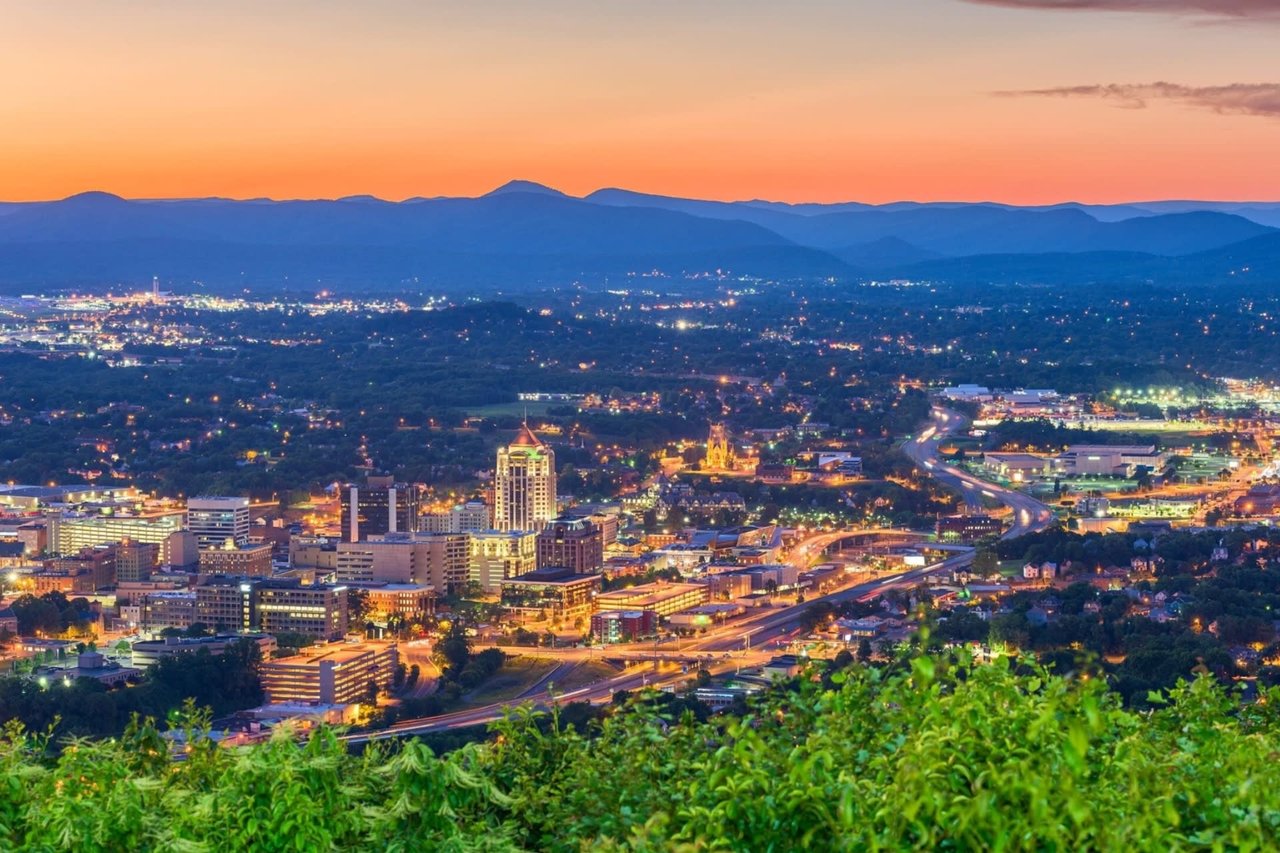
Today's downtown reflects that layered history directly — historic brick warehouses from the railroad era have been reimagined as residential lofts, restaurants, and gallery spaces, while the City Market building continues to anchor a revitalized urban core that draws both residents and regional visitors.
The Architecture of Roanoke
Roanoke's built environment reflects three distinct eras — the railroad-era commercial core, the mid-century residential expansion, and the contemporary architectural contributions of the Taubman Museum and the Blue Ridge Parkway corridor. For property buyers, these historical development periods translate into distinct neighborhood characters and inventory price tiers. View our complete 6 architectural landmarks guide to contrast specific properties.
The Establishment
South Roanoke
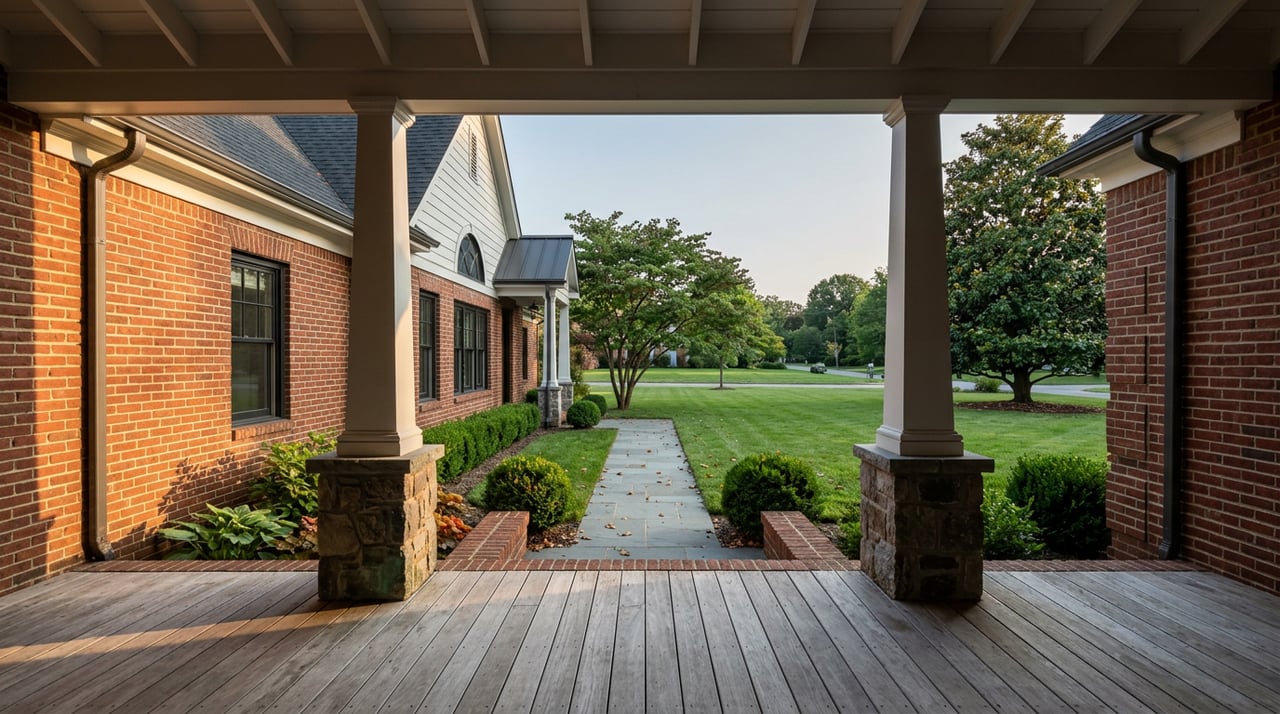
The historic estate district — developed in the early 20th century as Roanoke's railroad wealth moved into residential architecture. South Roanoke features large Colonial Revival, Tudor Revival, and Georgian-style estates on tree-lined streets adjacent to the Carilion Clinic medical campus. It remains Roanoke's most prestigious established residential address. For buyers seeking premium listings in this neighborhood corridor, access our dedicated Roanoke neighborhood hub directory.
The View
Mill Mountain
Home to the iconic Mill Mountain Star — the neon landmark first illuminated in 1949 that earned Roanoke the "Star City of the South" nickname — Mill Mountain offers residential properties with panoramic valley views and immediate access to Mill Mountain Park's trail system. Properties here trade privacy and seclusion for close proximity to downtown, with smart-home modern luxury estates increasingly common on the hillside parcels.
The Canvas
Custom Estates
The Roanoke Valley floor and surrounding Botetourt County offer expansive acreage parcels for custom estate construction — a category of the market that has grown significantly as secondary home buyers seek architectural ambition at an attractive price point. Review our current database of available land properties for sale to explore custom development tracts.
Considering a Relocation Move to Roanoke?
For home buyers moving from Northern Virginia, Washington DC, or other high-cost Mid-Atlantic markets, Roanoke's balance of historic charm and financial attainability represents a premier value proposition. Review our comprehensive analysis of the pros and cons of living in Roanoke for 2026 data loops.
Explore Roanoke Real Estate & Sub-Markets
Expand your knowledge of the regional housing corridor by navigating our local market and architectural asset profiles:
Frequently Asked Questions
When was Roanoke Virginia founded?
European settlers established the first permanent community in the area in the 1740s near salt marshes known as "licks." The village was originally named Gainsborough and later called Big Lick. Following rapid railroad infrastructure growth, it was officially incorporated as the City of Roanoke in 1884.
Why is Roanoke Virginia called the Star City?
Roanoke earned the "Star City of the South" nickname because of the Mill Mountain Star — an 88.5-foot neon monument erected on Mill Mountain overlooking the valley floor. First illuminated in 1949, it stands as one of the largest freestanding illuminated star structures in the world.
Why is Roanoke Virginia called Roanoke?
The name derives from the Powhatan Native American term "rawranock," which identified polished white shell beads used as trading currency. Early valley settlers adopted the title; it carries no geographic or historical relationship to the Lost Colony of Roanoke Island on the North Carolina coastline.
What was Roanoke Virginia called before it was Roanoke?
Prior to its municipal incorporation in 1884, the city center was named Big Lick due to the local mineral salt deposits that drew large native wildlife. The very first agrarian settlement recorded in the same mountain basin during the 1740s was mapped as Gainsborough.
What is Roanoke Virginia known for historically?
Roanoke is famously recognized as a historical locomotive rail capital, functioning as the primary production headquarters for the Norfolk and Western Railway. It is also distinguished by the 1882 open-air Historic Roanoke City Market, the grand Hotel Roanoke chalet structure, and contemporary landmarks like the custom Randall Stout-designed Taubman Museum of Art.
Acquire Your Place in History
Roanoke offers historic homes in established neighborhoods like South Roanoke, hilltop estates on Mill Mountain, and expansive custom build lots in the surrounding valley — all at price points that compare favorably to any comparable Virginia market. Christy Crouch and the Crouch Team have deep local knowledge of every corridor.