Open two builder websites side by side and search "new construction near Salem, VA." One result describes a community a few minutes from Lewis Gale Hospital and Historic Downtown Salem, listed under the Salem school district. The next result, built by a different company a couple of miles away, uses nearly identical language: close to Lewis Gale, close to Roanoke College, close to downtown. But this one is explicitly marketed as sitting in the Glenvar school district of Roanoke County.
Same pitch. Same proximity to the same landmarks. Two different governments deciding your tax rate, your school assignment, and who answers the phone when you call about a building permit.
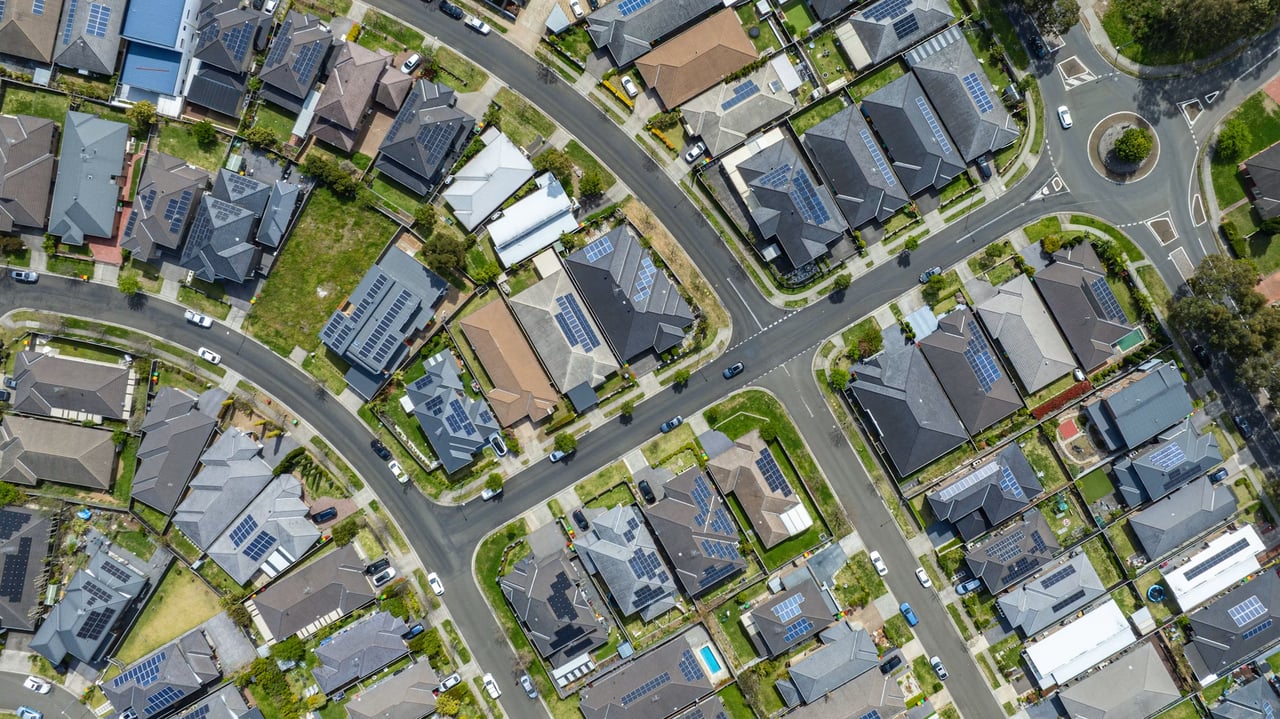
That distinction rarely shows up until a buyer is deep into comparing floor plans, and by then it can feel like a footnote. It isn't. Salem is not a neighborhood inside Roanoke County. It's a separate city with its own treasurer, its own council, and its own budget, and the invisible line around it runs through the same stretch of new-construction corridor that builders are actively marketing as one interchangeable area.
Virginia draws city lines differently than most states
Virginia has 38 independent cities, more than any other state in the country. An independent city isn't a town inside a county the way it works almost everywhere else in America. It's a standalone government that collects its own real estate taxes, runs its own school division, and handles its own roads, with no county oversight at all. Salem is one of them. Roanoke County, which wraps around Salem on most sides, is a separate jurisdiction entirely.
That means a property's address, its ZIP code, and its proximity to Salem landmarks tell you almost nothing about which government actually taxes it or which school division it feeds into. The only thing that matters is which side of the recorded city boundary the parcel sits on, and that boundary doesn't follow subdivision names or marketing copy.
What the line actually costs
The dollar difference is not trivial. Salem's real estate tax rate is published at $1.18 per $100 of assessed value, according to the city's own real estate tax office. Roanoke County's rate is $1.03 per $100, a figure the county administrator confirmed as unchanged after three consecutive years of reductions, according to Cardinal News' coverage of the Roanoke Valley's spring 2026 budget season.
On a home assessed at $400,000, that gap works out to roughly $600 a year, a few hundred dollars that shows up every June and December regardless of which builder's website first caught your eye. The gap has also been moving on its own timeline. Salem trimmed its rate by two cents in the cycle before last and was weighing another two-cent cut for the budget year that began this past July, per that same Cardinal News reporting, while Roanoke County's board chose to hold steady. The two governments are not just charging different amounts. They are working from entirely different budget calendars, which is one more reason the number on a builder's brochure can lag behind what actually lands on a tax bill.
The school line runs through the same corridor
The same boundary that decides your tax bill also decides which school division your children would attend. Salem operates Salem City Schools. The Roanoke County side of that corridor, immediately adjacent to Salem, is served by Glenvar. These are two entirely separate school divisions with separate budgets, separate boards, and separate funding formulas. Roanoke County's schools, for instance, are funded partly through the state's Local Composite Index, a formula that shifted enough this year that the county had to backfill part of a proposed reduction to keep school funding roughly level, according to the same Cardinal News budget reporting.
None of that is a statement about which school assignment is better. It's a statement about the fact that they are legally distinct systems, and a subdivision marketed as "near Salem" tells you nothing about which one your child would actually be zoned into. That has to be confirmed at the parcel level, not inferred from the community's name or its distance from downtown.
Why the median price you saw doesn't resolve any of this
If you've already looked at Salem's median home price on a portal, you've likely seen three different numbers depending on which site you checked. One recent snapshot showed a median list price near $399,000. Another showed a median sold price closer to $324,000 over the same window. A third showed an average home value closer to $312,000.
Those aren't typos or timing quirks. They're symptoms of the same underlying problem this whole piece is about. "Salem" as a search term on a real estate portal pulls in a mix of properties, some genuinely inside the city limits, some in the unincorporated Roanoke County communities that market themselves under the Salem name. Blend those two populations together and you get a median that doesn't describe either market cleanly. It describes an average of two different tax jurisdictions, two different school systems, and in some cases two different sets of city services, reported as if it were one number.
That's the real lesson buried in the spread between those figures. A median price is only useful once you know what geography it's actually measuring, and in this corridor, the geography is not what the community's name implies.
How to actually check before you write an offer
The good news is that this is one of the more solvable frictions in the buying process, once you know to look for it. A few concrete steps settle the question before you're emotionally attached to a floor plan:
- Ask the builder directly which locality the parcel is recorded in, not just which city it's marketed near. A builder representative can tell you this in one sentence.
- Pull the parcel through the relevant GIS or real estate assessment lookup for either the City of Salem or Roanoke County, depending on which one the builder names. Both localities maintain public parcel search tools tied to tax maps.
- Confirm the school assignment separately from the community's marketing language. A listing that says "Salem school district" or "Glenvar school district" is telling you something specific and verifiable, not just describing the neighborhood's vibe.
- Compare the actual quoted tax rate on your loan estimate against both the city and county figures above. If the number on your paperwork doesn't match either $1.18 or $1.03 per $100, ask why before you're at the closing table.
None of this is complicated once someone points you toward it. The friction isn't that the answer is hard to find. It's that most buyers never think to ask the question, because the marketing on both sides of the line looks identical.
A few common questions
Does the ZIP code tell me whether a home is in Salem or Roanoke County? Not reliably. Postal ZIP codes are drawn for mail delivery, not for taxing jurisdiction, and a single ZIP code can span both the city and the surrounding county.
If a home is in Roanoke County but has a Salem mailing address, do I pay Salem taxes? No. Your real estate tax is set entirely by the jurisdiction where the parcel is legally recorded, regardless of what city name appears in the mailing address.
Is one side of this line objectively a better buy than the other? That depends entirely on your priorities around tax rate, school assignment, lot size, and commute, and it's a conversation worth having with someone who can walk the specific parcel with you rather than a generalization that applies to the whole corridor.
If you're comparing new-construction communities anywhere along the Salem and Roanoke County line and want a clear answer on which jurisdiction a specific property actually falls in before you tour it, The Crouch Team can walk that parcel with you and pull the numbers that matter before you make an offer. Book an appointment and bring the address. We'll tell you exactly which line it's on.