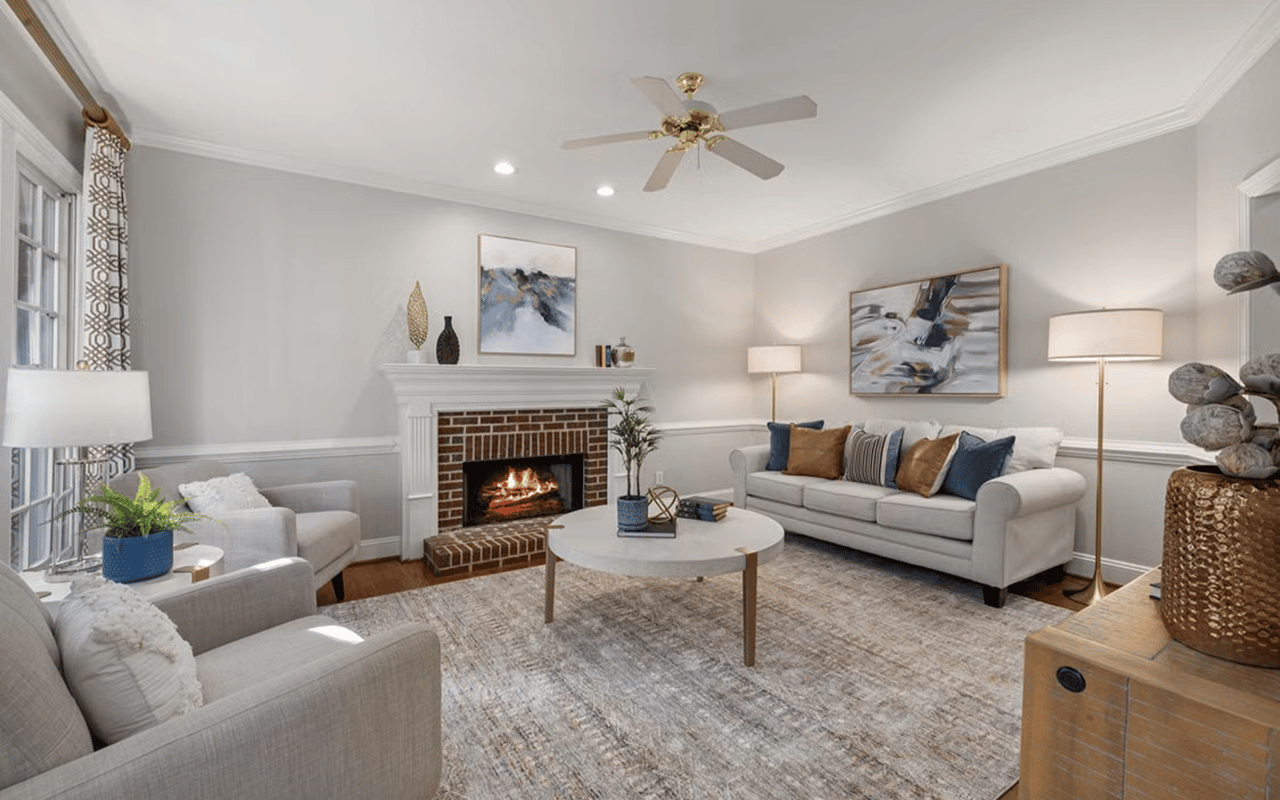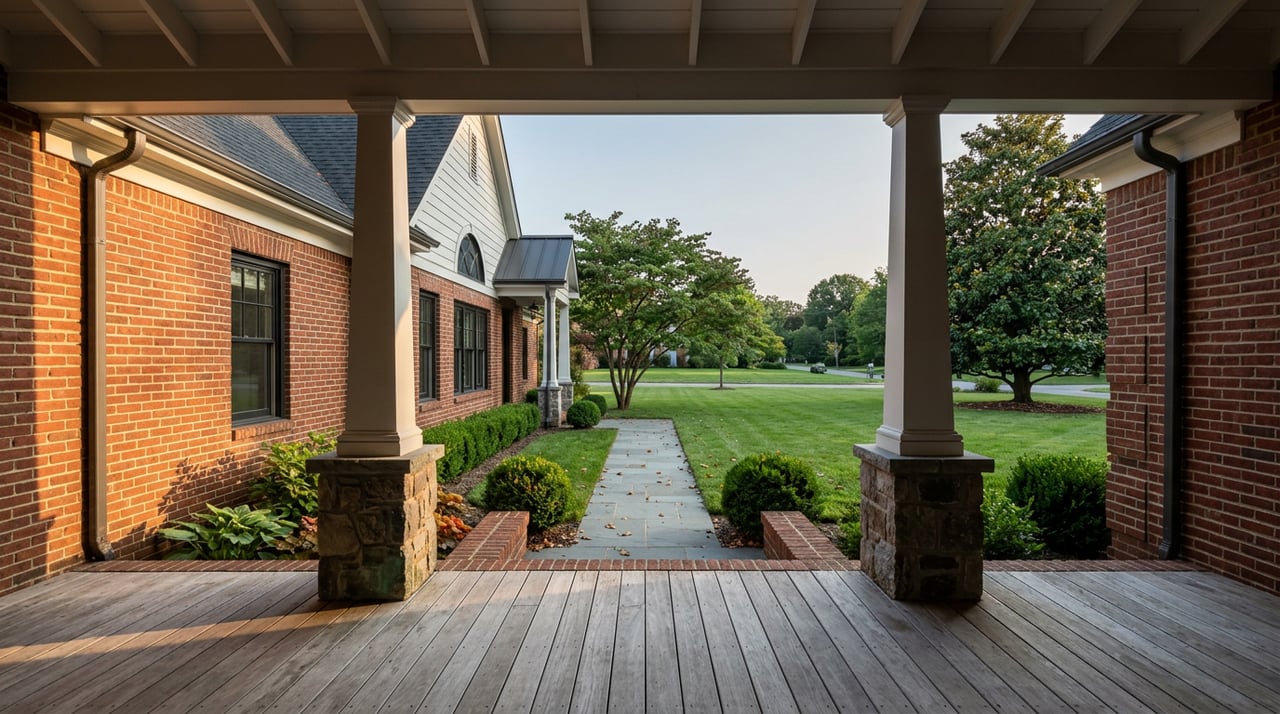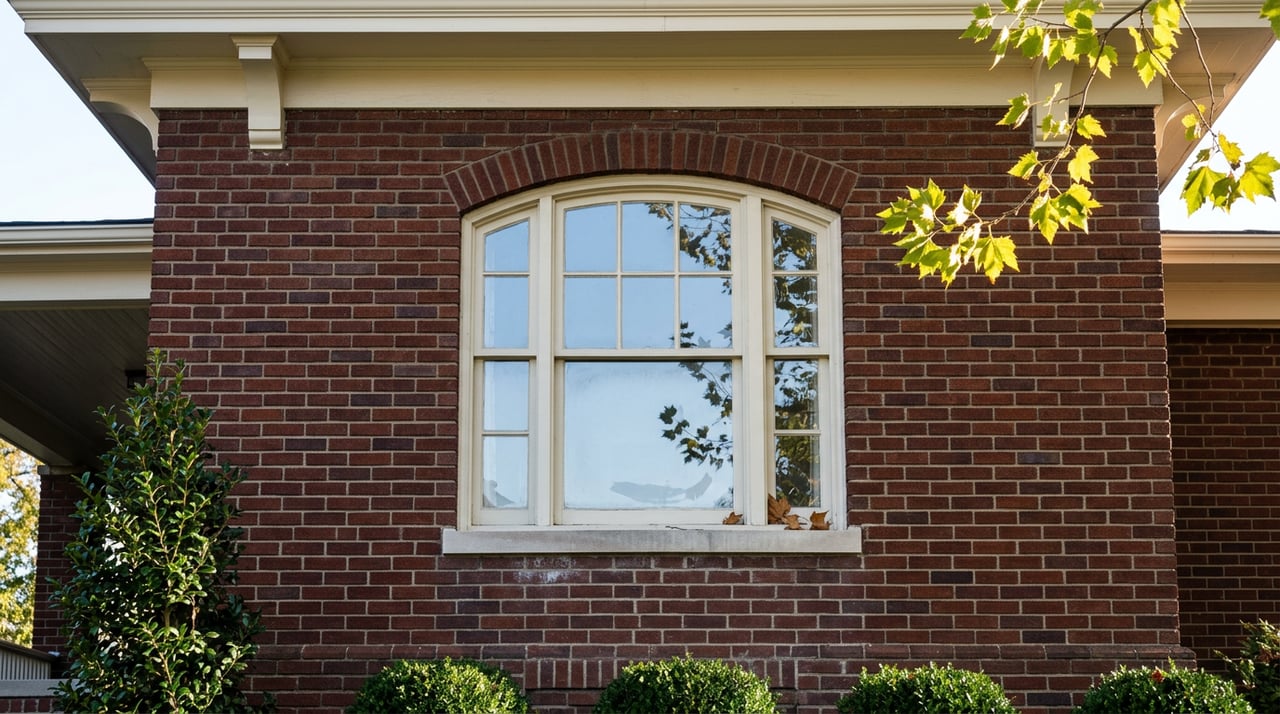
A buyer touring a bungalow on one of Old Southwest's tree-lined streets this fall will probably fall for the same things everyone falls for: the wide porch, the leaded glass transom over the front door, the way the afternoon light comes through original wavy panes. Then they'll notice the windows are drafty, mention to their agent that they'd like to swap them for something more efficient once they close, and hear something that stops the conversation: not so fast. If the parcel sits inside the city's H-2 overlay, that window replacement needs a Certificate of Appropriateness before a contractor can touch it.
That single requirement, more than school zones or walkability scores, explains something that looks backwards on paper. In August 2026, Old Southwest's median list price was $269,000. Roanoke's citywide median the following month, in September 2026, was $319,000. A neighborhood widely regarded as one of the city's most architecturally significant, most walkable pockets of early-twentieth-century housing is pricing roughly $50,000 below the city as a whole. That gap isn't a signal that Old Southwest is less desirable. It's the market doing arithmetic on a layer of procedural friction that most out-of-town buyers, and plenty of local ones, don't find out about until they're already touring.
The Overlay Nobody Mentions at the Open House
Old Southwest was listed on the Virginia Landmarks Register and the National Register of Historic Places in 1985. Following that designation, Roanoke created the H-2 Neighborhood Preservation zoning district and its own Architectural Review Board to protect the area's historic character. The H-2 overlay covers most of Old Southwest along with portions of Mountain View, Hurt Park, and Gainsboro.
Inside that overlay, any exterior change to a property, from a window or roof replacement to a new porch rail, an addition, or a demolition, requires a Certificate of Appropriateness before a building permit is issued. The city's Historic District Guidelines spell out what the seven-member volunteer Architectural Review Board is looking for, and the board meets monthly to review applications and, in some cases, hold hearings on projects that don't qualify for simple staff sign-off. In 2025, the board revised its guidelines to tighten standards around window and roofing replacement materials and to clarify rules for where solar panels and other alternative energy equipment can go on a historic structure. That's not red tape for its own sake. It's the mechanism that keeps a 1920s streetcar suburb from slowly turning into a patchwork of vinyl replacement windows and mismatched rooflines, which is exactly what happened to parts of the neighborhood after World War II before the district was formally protected.
For a buyer, though, it means the timeline and scope of "just doing some updates" looks different here than it would in a neighborhood without an overlay. That difference shows up in the price.
What the Median Price Gap Is Actually Measuring
Buyers who compare Old Southwest's median against South Roanoke, Raleigh Court, or Grandin Village on price alone are missing the variable that matters most: how much of the visible housing stock still needs the kind of exterior work that triggers a Certificate of Appropriateness review. A house with original single-pane windows, an aging slate or metal roof, and decades of deferred porch repair isn't just older. It's a house where the next owner's renovation plan has to run through an approval process before it can start, and where materials that meet the district's standards, like wood-frame replacement windows instead of standard vinyl, often cost more than a big-box equivalent.
Investors and flip buyers, who prize speed above almost everything else, tend to discount for that step even more heavily than owner-occupants do. That discounting shows up in comparable sales and pulls the neighborhood median down, even on blocks where individual restored homes are selling well above the area average. The result is a citywide comparison that makes Old Southwest look like a discount when it's really a market correctly pricing in a review process, not a lack of demand for the architecture itself.
The Credit Nobody Explains at Closing
Here's the part of the math that most buyers never get to, because it isn't on the listing sheet and it isn't something a general home inspector brings up. Virginia's Historic Rehabilitation Tax Credit allows an owner-occupant of a certified historic structure, which includes homes contributing to the Old Southwest district, to claim a state income tax credit equal to 25 percent of eligible rehabilitation expenses. To qualify, the work has to be substantial: for an owner-occupied home, eligible expenses must equal at least 25 percent of the building's assessed value for local real estate tax purposes in the year before the rehab began. Unused credit can be carried forward for up to 10 years.
A federal credit exists too, worth 20 percent of eligible expenses, but it's only available for income-producing property, so a straightforward owner-occupant doesn't get to stack both. If a buyer converts part of the home to a rental unit or otherwise puts it to income-producing use, the combined state and federal credits can reach 45 percent of eligible rehab costs. For most buyers touring Old Southwest as a primary residence, though, the number that actually applies is the 25 percent state credit against a real, documented spend once the threshold is cleared.
This isn't a theoretical incentive that exists only in a state tax code. Restoration Housing, a Roanoke nonprofit, has completed seven historic rehabilitations across Old Southwest and other older city neighborhoods, with two more currently in progress, work funded in part through these same historic tax credits. Renovation Alliance, a firm focused on preservation-minded renovation, keeps its own office inside the Southwest Historic District, which tells you the ecosystem of contractors who know how to navigate the Certificate of Appropriateness process while also structuring a project to hit the credit threshold isn't hypothetical. It's already operating on these streets.
A Second Break the City Offers, Separate From the Credit
The state tax credit runs through your Virginia income tax return. Roanoke also maintains a separate real estate tax abatement program for qualifying repairs made to properties inside its historic districts, administered locally rather than through the state. City officials discussed this program in an April 2025 council session and noted that the length of the abatement has changed from earlier versions but that it remains available for qualifying work. It's a different lever than the income tax credit, tied to your property tax bill rather than your income tax liability, and worth asking about specifically if you're budgeting a renovation timeline for a house inside the overlay.
The City Already Knows Buyers Are Getting Surprised
That same April 2025 session is worth knowing about for a more basic reason: it shows Roanoke is actively working on the exact information gap this article is trying to close. Council members and Architectural Review Board participants discussed pushing for stronger outreach to real estate agents and title companies so that buyers learn about overlay restrictions earlier in the purchase process, rather than discovering them after closing. Old Southwest's own neighborhood groups are planning to send notices to new owners, and the board has talked about returning to in-person workshops on subjects like roof and window replacement, the two most common triggers for a Certificate of Appropriateness review.
In other words, if you're asking about H-2 status and the Certificate of Appropriateness process before you write an offer, you're doing exactly what the city itself is trying to get more buyers to do earlier.
How to Check Before You Write the Offer
A few steps take the guesswork out of this before you're under contract:
- Search the property on Roanoke's GIS Real Estate tool and check the Zoning Lot Information for an H-2 or NDD overlay flag. This tells you immediately whether exterior work on this specific parcel needs board review.
- Ask whether your planned renovation, window replacement, roofing, an addition, qualifies for administrative staff approval or requires a full hearing before the Architectural Review Board, which meets monthly on the Thursday following the second Monday.
- If you're planning to pursue the state tax credit as an owner-occupant, get the home's current assessed value on record before any work begins. The 25 percent spending threshold is measured against that pre-rehabilitation baseline, so the order of operations matters.
- Talk with a CPA familiar with Virginia's historic credit program, or reach out to the Virginia Department of Historic Resources directly, before finalizing a renovation budget. The credit offsets income tax, not your purchase price, and how much of it you can use in a given year depends on your tax liability.
The Real Comparison
A lower median in Old Southwest isn't a sign that the neighborhood is a lesser version of South Roanoke or Grandin Village. As we've outlined in our own look at Roanoke's neighborhoods, each pocket of this city carries its own pricing baseline for its own reasons, and Old Southwest's has more to do with the cost of doing renovation the right way than with any lack of demand for its architecture. For a buyer who wants the leaded glass and the wide porch and is willing to work with the Architectural Review Board instead of around it, the math on this house includes a credit that doesn't exist anywhere else in the city, and that changes the comparison entirely.
If you're weighing a historic Old Southwest property against a newer build in Cave Spring or a renovated home in Raleigh Court, the honest answer depends on your renovation plans, your tax situation, and your timeline, not just the number on the listing. The Crouch Team has walked Roanoke buyers through exactly this comparison for years. Book an appointment and we'll go through the real math on a specific property with you before you write an offer.
A Few Common Questions
Does the H-2 overlay cover all of Old Southwest? It covers most of the neighborhood, along with portions of Mountain View, Hurt Park, and Gainsboro. Not every parcel inside those neighborhood boundaries falls under the overlay, which is why checking the specific address on the city's GIS tool matters more than assuming based on the neighborhood name.
Do I need approval to repaint or do interior renovation work? No. The Certificate of Appropriateness requirement applies to exterior alterations, new construction, and demolition. Interior work and repainting in the same color family generally don't trigger board review.
Can I claim both the state and federal historic tax credit as an owner-occupant? Generally no. The federal 20 percent credit is limited to income-producing property. An owner-occupant who lives in the home full time typically qualifies only for Virginia's 25 percent state credit, unless part of the property is converted to rental use.
Where do I find out if a specific house is in the overlay before I tour it? Roanoke's GIS Real Estate search tool lets you look up a parcel by address or owner name and check its Zoning Lot Information for an H-2 or NDD flag, which tells you whether the Architectural Review Board process applies.